How to Verify an Auto Transport Company’s License 2026 Guide
Table of Contents
- Understanding Auto Transport Licensing Requirements
- What is an MC Number and Why Does It Matter?
- How to Find a Company’s USDOT Number
- Verifying Insurance Coverage and Bond Requirements
- Understanding FMCSA Safety Ratings
- Checking Public Records and Consumer Protections
- State-Specific Regulations for Intrastate Transport
- Evaluating Online Reviews and Reputation Management
- Essential Contract Terms and Federal Regulations
Choosing a car shipping company feels straightforward — until you realize not all of them are licensed to operate. Before you hand over your keys, knowing how to ship a car safely starts with one non-negotiable step: verifying the company’s license.
This guide walks you through every verification layer the federal government and state authorities require. It takes about 30–45 minutes to complete, and it could save you from losing your vehicle to an unlicensed operator.
Before diving in, you may also want to read our guide on how to know if a car transport company is legit — it covers scam red flags that even a license check won’t always catch.
Understanding Auto Transport Licensing Requirements
Every legitimate auto transport company that crosses state lines must hold federal authorization from the Federal Motor Carrier Safety Administration (FMCSA). This agency regulates all interstate commercial vehicle operations in the United States.
Two identifiers prove a company’s legal status:
- MC Number (Motor Carrier Number) — authorizes the company to transport regulated freight for payment
- USDOT Number — tracks the company’s safety record, inspections, and crash history
These numbers appear on every Company Snapshot page in the FMCSA database. Operating without them exposes a company to penalties ranging from $25,000 per violation up to criminal prosecution — and exposes you to having your vehicle transported with zero legal recourse.
What Is an MC Number and Why Does It Matter?
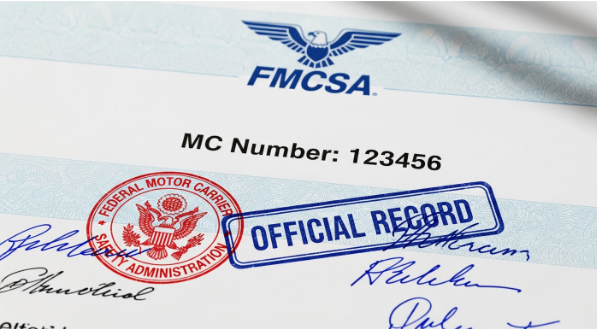
The MC Number is the FMCSA-issued credential that distinguishes a licensed freight carrier from an unlicensed one. To obtain it, a company must prove financial responsibility, adequate insurance, and a workable safety management plan.
Understanding the difference between a carrier and a broker matters here: both need MC Numbers, but they carry different liability. A carrier physically transports your car; a broker arranges transportation through third parties. Make sure you know which one you’re dealing with.
The MC Number stays active only as long as the company stays compliant. Verification takes about 3 minutes:
|
Step |
Action |
Time |
What You Learn |
|
1 |
Go to safer.fmcsa.dot.gov |
30 sec |
Navigate to search portal |
|
2 |
Enter company name or MC Number |
15 sec |
Pull up their database record |
|
3 |
Review Company Snapshot |
90 sec |
Active/Inactive authorization status |
|
4 |
Check insurance levels on file |
45 sec |
Confirm coverage amounts |
How to Find and Check a Company’s USDOT Number
The USDOT Number is the second half of the verification puzzle. It tracks every safety-relevant event in a carrier’s history: roadside inspections, crash records, and enforcement actions from federal regulators.
A company’s USDOT Number must be displayed on all their transport vehicles. You can verify it through the Company Snapshot on the FMCSA website. The snapshot shows:
- Carrier name and physical address
- Operating status and out-of-service percentage
- Total crashes and roadside inspection history
- Cargo type and operation classification
The safety history revealed by the USDOT Number is what lets you make a truly informed decision — not just whether the company exists legally, but how safely it actually operates.
Verifying Insurance Coverage and Bond Requirements
Insurance is where many consumers get caught off guard. Understanding auto transport insurance before you book protects you from discovering gaps in coverage after something goes wrong.
Here’s what federal law requires:
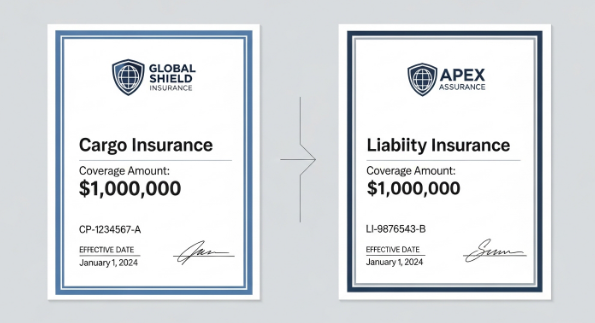
- Cargo insurance: Minimum $750,000 to $1,000,000 per occurrence — this covers your vehicle during transport
- Liability insurance: Minimum $1,000,000 for carriers transporting general freight — covers third-party injuries and property damage
Coverage requirements also vary by transport type. Open vs enclosed transport carry different risk profiles, and enclosed carriers typically hold higher coverage levels. If you’re shipping a high-value vehicle, verify the enclosed transport insurer separately.
Insurance lapses trigger automatic suspension of a carrier’s operating authority within 48 hours.
This means a company that was licensed yesterday might not be licensed today if they missed a premium payment. Always verify current status — not what they showed you last week.
Surety bonds add another layer of protection. Brokers typically carry bonds ranging from $10,000 to $75,000. These bonds compensate you for specific violations like failure to deliver or unauthorized charges.
Three-step insurance verification:
- Request a certificate of insurance directly from the carrier
- Verify the insurance company’s credentials through your state’s insurance department
- Cross-check continuous coverage through the FMCSA database
Also check our overview of car shipping costs — insurance type directly affects your quote, and knowing why helps you compare apples to apples.
Understanding FMCSA Safety Ratings
The FMCSA evaluates carriers through compliance reviews every 18–24 months. These reviews examine driver qualifications, vehicle maintenance standards, and operational safety practices. Every carrier receives one of three ratings:
|
Rating |
Compliance Level |
Operational Impact |
Required Action |
|
Satisfactory |
Full Compliance |
Unrestricted operations |
Maintain current standards |
|
Conditional |
Partial Compliance |
Limited operations allowed |
Fix deficiencies within 60 days |
|
Unsatisfactory |
Inadequate Compliance |
Operating authority revoked |
Cease operations immediately |
Compliance reviews occur every 18 to 24 months for most carriers. Federal regulations mandate these examinations evaluate safety fitness. Review officers inspect records, interview personnel, and examine vehicles. The comprehensive assessment determines ongoing operating eligibility.
Checking Public Records and Consumer Protections
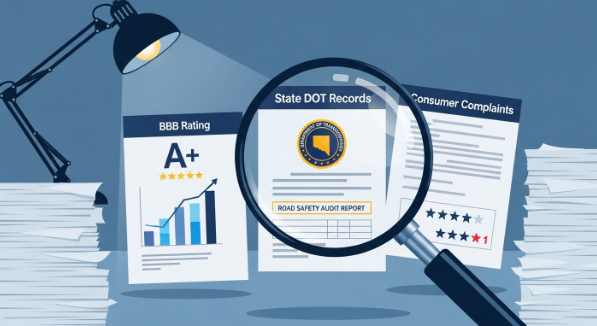
The Better Business Bureau (BBB) maintains complaint histories, resolution rates, and accreditation status for transport companies. Their A+ to F grading system reflects how a company handles disputes over a rolling 36-month period.
State Departments of Transportation add another oversight layer — especially important for intrastate moves. If you’re moving within a single state, the carrier may only need state-level authorization, not a federal MC Number.
Four-step public records check:
- Search the BBB database by company name and location
- Review complaint volume and patterns over the past 36 months
- Examine how the company responded to and resolved complaints
- Cross-reference findings with the FMCSA complaint database
A single complaint can be an isolated incident. Multiple unresolved complaints signal a systemic problem. Pay particular attention to whether the company responds at all — silence is a red flag.
State-Specific Regulations for Intrastate Transport
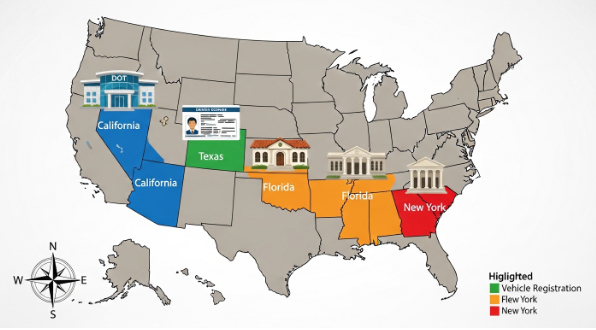
Federal credentials cover interstate moves. But if your car is only traveling within one state, the carrier needs state-level operating authority — and those requirements vary significantly.
|
State |
Licensing Agency |
Min. Insurance |
Extra Requirements |
Processing Time |
|
California |
Public Utilities Commission |
$750,000 |
Safety Compliance Certificate |
45 days |
|
Texas |
Dept. of Motor Vehicles |
$1,000,000 |
Annual Registration Renewal |
30 days |
|
Florida |
Dept. of Transportation |
$1,250,000 |
Quarterly Safety Audits |
60 days |
|
New York |
Dept. of Transportation |
$1,000,000 |
Surety Bond $15,000 |
90 days |
State regulations also change annually. A carrier must monitor state DOT notifications for updates and remain compliant in every state where they operate. Federal credentials never override state-specific intrastate requirements.
If you’re planning a long-distance move, Interstate car shipping page shows how AWZ Autotransport handles multi-state compliance across all 50 states.
Evaluating Online Reviews and Reputation
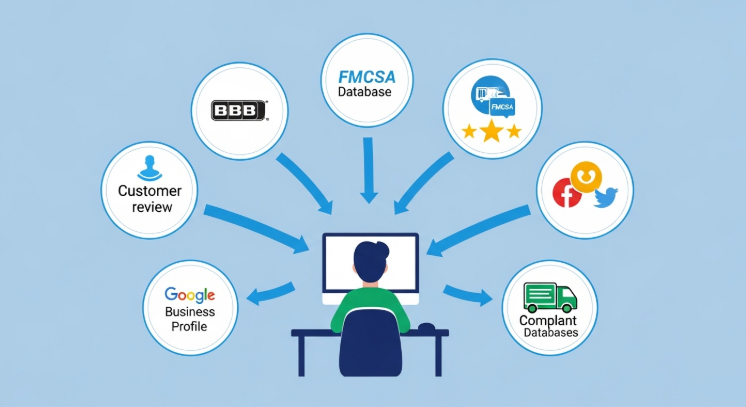
Official records tell you whether a company can legally operate. Reviews tell you whether they actually do it well. For a complete picture, analyze at least 50–100 reviews across Google, Yelp, BBB, and Transport Reviews.
What to look for in a trustworthy review profile:
- Over 100 total reviews — indicates an established operation
- Reviews posted within the last 90 days — shows current service quality
- Response rate above 75% — signals real customer service commitment
- Specific details (dates, routes, vehicle types) — authenticates the reviewer’s experience
- Company responses to complaints that describe actual resolutions — not generic apologies
- Consistent ratings across multiple platforms — cross-platform consistency is hard to fake
Be skeptical of review profiles with sudden bursts of 5-star reviews using identical language. Authentic reviews reflect genuine experiences with specific operational details.

Essential Contract Terms and Federal Regulations
A valid contract is your legal protection if anything goes wrong. Knowing what documents you need to ship a car also prepares you for what to bring at pickup. The FMCSA requires every carrier to provide a written estimate before transportation begins, and that estimate is binding except when vehicle conditions change after physical inspection.
Federal regulations prohibit deposits exceeding 25% of total charges. Full payment is only due upon delivery. Any carrier demanding full payment upfront is violating federal law.
Your contract must include all of the following:
- Vehicle description with VIN verification
- Origin and destination addresses with ZIP codes
- Pickup window (typically 1–3 days)
- Delivery timeframe (1–14 days based on distance)
- Itemized charges: base rate, fuel surcharge, and any extras
- Insurance coverage amounts for both cargo and liability
- Dispute resolution procedure, including any arbitration clauses
- Force majeure provisions covering weather and road closures
Never sign a contract that doesn’t include these elements. Verbal agreements have no legal weight in transport disputes.
State-specific contract rules also apply. California requires Spanish-language contracts upon request. New York mandates 72-hour penalty-free cancellation rights. Texas requires specific disclosure language around inspection procedures.
Final Verification Checklist Before You Book
Here’s your complete pre-booking verification sequence:
- Check the MC Number on the FMCSA SAFER website, confirm Active status
- Verify the USDOT Number, review crash and inspection history
- Confirm current insurance certificates, request directly from the carrier
- Check FMCSA safety rating, For Satisfactory only
- Search BBB and FMCSA complaint databases, look for patterns, not just volume
- Verify state-level authorization if the move is intrastate
- Review 50–100 cross-platform reviews, look for authenticity signals
- Read the full written contract all required terms must be present
This process takes 30–45 minutes and protects an asset worth tens of thousands of dollars. Before you start, also review the 7 mistakes to avoid when shipping a vehicle so you don’t skip a step that could cost you.
Once your verification is complete, you’ll want to prepare your car for shipping — from documenting pre-existing damage to removing personal items. And if you’re still comparing providers, our guide on how to choose the best car shipping company walks through every selection criterion side by side.
AWZ Autotransport maintains active federal MC Number and USDOT registration, insurance coverage exceeding federal minimums, and a Satisfactory FMCSA safety rating. If you’d like to verify our credentials or get a quote for shipping your car anywhere in the USA, contact us directly.
Frequently Asked Questions
How do I check if an auto transport company is licensed?
Visit safer.fmcsa.dot.gov and search by company name or MC Number. An Active status confirms the company holds current federal operating authority.
What is a USDOT Number and do I need to verify it?
Yes. The USDOT Number tracks a carrier’s safety performance, inspections, and crash history. It’s separate from the MC Number and provides insight into how safely the company actually operates — not just whether they’re registered.
Can a broker ship my car without a carrier license?
Brokers arrange transportation through licensed carriers — they don’t drive the trucks. Both brokers and carriers need federal MC Numbers, but brokers don’t need cargo insurance. This is why it’s critical to understand the difference between a carrier and a broker before booking.
What insurance should an auto transport company carry?
Federal minimums require cargo insurance of $750,000–$1,000,000 per occurrence and liability insurance of at least $1,000,000. Any insurance lapse automatically suspends a carrier’s operating authority within 48 hours.
How long does it take to verify a car transport company?
A complete verification — MC Number, USDOT, insurance, safety rating, public records, and contract review — takes 30–45 minutes. Given the value of your vehicle, that’s time well spent.