If you have PCS orders overseas, the military will ship one privately owned vehicle (POV) at government expense through the Defense Personal Property System (DPS) and the Surface Deployment and Distribution Command (SDDC), but only within specific size, weight, and vehicle-age limits. A second vehicle, a CONUS-to-CONUS move, or anything that doesn’t fit the government’s rules has to go through a private auto transport company instead. This guide breaks down exactly which path applies to your move.
PCS season brings a wall of acronyms DPS, SDDC, VPC, SIT right when you’re already juggling household goods, housing, and a report-no-later-than date. This guide separates what the government ships for you from what you have to arrange yourself, so you can book the right option before your turn-in deadline creeps up on you. If you’d rather have someone walk you through your specific move, our military vehicle transport services team handles both the private-carrier leg and the questions DPS/SDDC don’t answer clearly.
What Counts as a POV Shipment Under PCS Orders?
Your PCS orders create an entitlement, not a guarantee that every vehicle you own gets shipped free. The Joint Travel Regulations allow one POV shipment at government expense per set of PCS orders when you’re moving to an OCONUS (overseas) duty station, or returning from one back to the continental U.S. The government issues a bill of lading through SDDC, and the shipment moves through a government contract carrier and a Vehicle Processing Center (VPC) — not a random tow truck or moving company.
The entitlement generally covers one vehicle per service member (and in some cases a second for accompanied tours, depending on branch and location policy — always confirm this with your transportation office before assuming). It does not typically cover moves between two CONUS duty stations; those are considered a personal move, and any vehicle shipping is on you.
Eligibility hinges on:
- Type of orders — OCONUS-bound or OCONUS-returning PCS orders qualify; a routine CONUS PCS usually doesn’t.
- Ownership — the vehicle must be registered to you, your spouse, or a dependent listed on the orders.
- Vehicle condition — it must be roadworthy and able to be driven onto the carrier under its own power (or clearly noted as non-operational at turn-in, which can complicate scheduling).
- One-shipment rule — additional vehicles are your responsibility, arranged and paid for privately.
If you’re not sure your orders qualify, your installation’s Personal Property Processing Office (PPPO) can confirm it in a five-minute phone call — worth doing before you build your whole moving timeline around an assumption.
SDDC/DPS Process Step by Step
Once you know you’re entitled to a government-funded POV shipment, the process runs through the DPS portal and SDDC’s network of Vehicle Processing Centers. Here’s the general flow:
- Log into DPS with your orders in hand. Create a POV shipment application alongside (or separate from) your household goods shipment. You’ll need your orders number, vehicle make/model/VIN, and estimated report date.
- Select a shipping window. DPS will show available pickup dates at VPCs near your losing installation. Book early — popular windows near summer PCS season fill up fast.
- Schedule your drop-off appointment. You’ll get a confirmed date and time at a specific VPC. Check the documents needed to ship a car ahead of time — title or registration, orders, driver’s license — and arrive with the vehicle at less than a full tank of gas (most VPCs cap it around a quarter tank for safety).
- Complete the turn-in inspection. A VPC agent documents existing damage, mileage, and condition on a joint inspection form — photograph everything yourself too, since this record is what any damage claim will reference later.
- Receive your claim tag and paperwork. Keep this; you’ll need it to track the shipment and to pick up the vehicle at destination.
- Track shipment status in DPS. Overseas shipments typically move by roll-on/roll-off vessel, so transit time depends on port schedules, not just distance.
- Pick up at the destination VPC. Bring your claim tag and ID; inspect the vehicle against the original condition report before you sign for it.
Because everything routes through a government contract and a fixed VPC network, you don’t get to choose your own carrier for this leg — that flexibility only exists if you go the private-transport route described further down.
OCONUS Size, Weight, and Modification Limits
This is where a lot of PCS moves hit a wall. SDDC’s government-funded shipment isn’t a blank check — it comes with dimension and configuration limits set partly by SDDC and partly by host-nation import rules at your destination. A vehicle that’s legal and common in the U.S. can still be turned away if it’s too tall, too wide, or modified in ways the destination country restricts.
| Category | Typical Restriction | Why It Matters |
| Overall height/width | Host-nation and vessel loading limits (varies by port and destination) | Oversized vehicles may not fit VPC or vessel loading equipment |
| Lift kits / oversized tires | Often restricted or requires prior approval | Some countries treat modified suspension height as a safety/emissions issue at customs |
| Aftermarket exhaust, tint, lighting | May violate host-nation vehicle code | Vehicle can be held at customs even after shipping |
| Vehicle age | Some countries restrict import of older vehicles | Age limits vary widely by host nation |
| Non-factory modifications | Case-by-case, often needs documentation | Increases risk of customs delay or rejection |
| Second/oversized vehicle | Not covered by government entitlement | Must go private regardless of size |
Rules here change based on your specific host nation and are set at the country level, not uniformly worldwide — a size limit that applies moving to Germany may not match one for Japan or South Korea. Because customs and import rules are genuinely destination-specific, it’s worth reading our international car shipping breakdown alongside your local transportation office’s guidance before you finalize anything, since these figures are revised periodically.
If your vehicle is modified — lowered, lifted, or running aftermarket parts — it’s worth reading up separately on shipping a lowered or modified vehicle with enclosed transport, since ground clearance and trim concerns apply whether you’re shipping privately or trying to get a modified vehicle accepted at a VPC. If your household’s second vehicle happens to be an EV, note that shipping an EV overseas has extra rules around battery state-of-charge and hazmat handling that don’t apply to gas vehicles.
When You Need a Private Auto Transport Company Instead
A private carrier isn’t a downgrade — it’s simply the correct tool for anything outside the one-vehicle, OCONUS-only government entitlement. Common scenarios where service members and spouses book private auto transport during a PCS:
- A second vehicle. If your household has two cars and orders only cover one government-funded shipment, the second one needs a private mover.
- CONUS-to-CONUS moves. Moving from Fort Campbell to Fort Bliss, for example, isn’t a government-funded POV shipment situation — that’s private transport territory, the same as any civilian household goods move.
- Tighter timelines than SDDC can offer. DPS scheduling depends on VPC availability and vessel schedules; if you need a vehicle at your new location faster, expedited car shipping through a private carrier can beat the government timeline.
- A vehicle that doesn’t meet OCONUS restrictions. Rather than risk a customs hold, some service members ship the vehicle to a CONUS storage location or a family member’s address via private carrier and sell or store it instead of shipping overseas.
- Door-to-door convenience. SDDC shipment means dropping off and picking up at a VPC, which isn’t always close to your home or new duty station. A private carrier can often pick up and deliver much closer to your actual door.
When you’re comparing private movers, understanding carrier vs. broker — what’s the difference matters just as much for a PCS move as it does for a routine cross-country shipment — a broker arranges the shipment, a carrier physically hauls it, and knowing which one you’re actually booking affects who’s accountable if something goes wrong. It’s also worth a quick read on how to avoid auto transport scams before you hand over a deposit, since PCS deadlines make service members an easy target for fly-by-night operators.
Timelines, Storage-in-Transit, and Pickup at Destination
Timing is usually the most stressful part of shipping a POV during PCS, mostly because two different clocks are running: your report-no-later-than date, and the vehicle’s actual transit time.
- Book early. DPS scheduling windows near your turn-in date fill up quickly during peak PCS season (May–August). Try to schedule your POV shipment as soon as you have firm orders, not after you’ve handled everything else.
- Turn-in to pickup transit time varies widely by destination. Overseas shipments move by vessel, and transit plus port processing can take anywhere from a few weeks to well over a month depending on the route and season — don’t assume a fixed number without checking your specific route.
- Storage-in-transit (SIT) applies if you can’t pick up your vehicle right when it arrives at the destination VPC — for instance, if you’re still in temporary lodging or haven’t finished in-processing. A limited number of free SIT days is usually built into government shipments; beyond that, storage fees at the port can apply.
- Delayed pickup has consequences. Vehicles left at a destination VPC or port past the free storage window can accrue daily fees, and in some cases repeated no-shows can affect future shipment privileges.
- Plan your own transportation gap. Between turn-in and pickup, you won’t have that vehicle — factor that into whether you need a rental, a second private-shipped vehicle, or a spouse’s car during the gap.
Read up on what to do if your car won’t start before turn-in rather than just skipping the date — flag a non-operational vehicle with the VPC ahead of time, since it usually needs extra paperwork and sometimes different handling equipment at drop-off.
Costs, Insurance, and What’s NOT Covered
The government-funded SDDC shipment covers the core transport cost of one eligible POV to an OCONUS destination, but it isn’t a blank check for every cost you might run into.
Typically covered:
- Transport of one eligible POV, government contract carrier
- Standard turn-in and pickup handling at VPCs
- A limited number of SIT days at destination if you can’t pick up immediately
Typically NOT covered:
- A second vehicle, or any vehicle on a CONUS-to-CONUS move
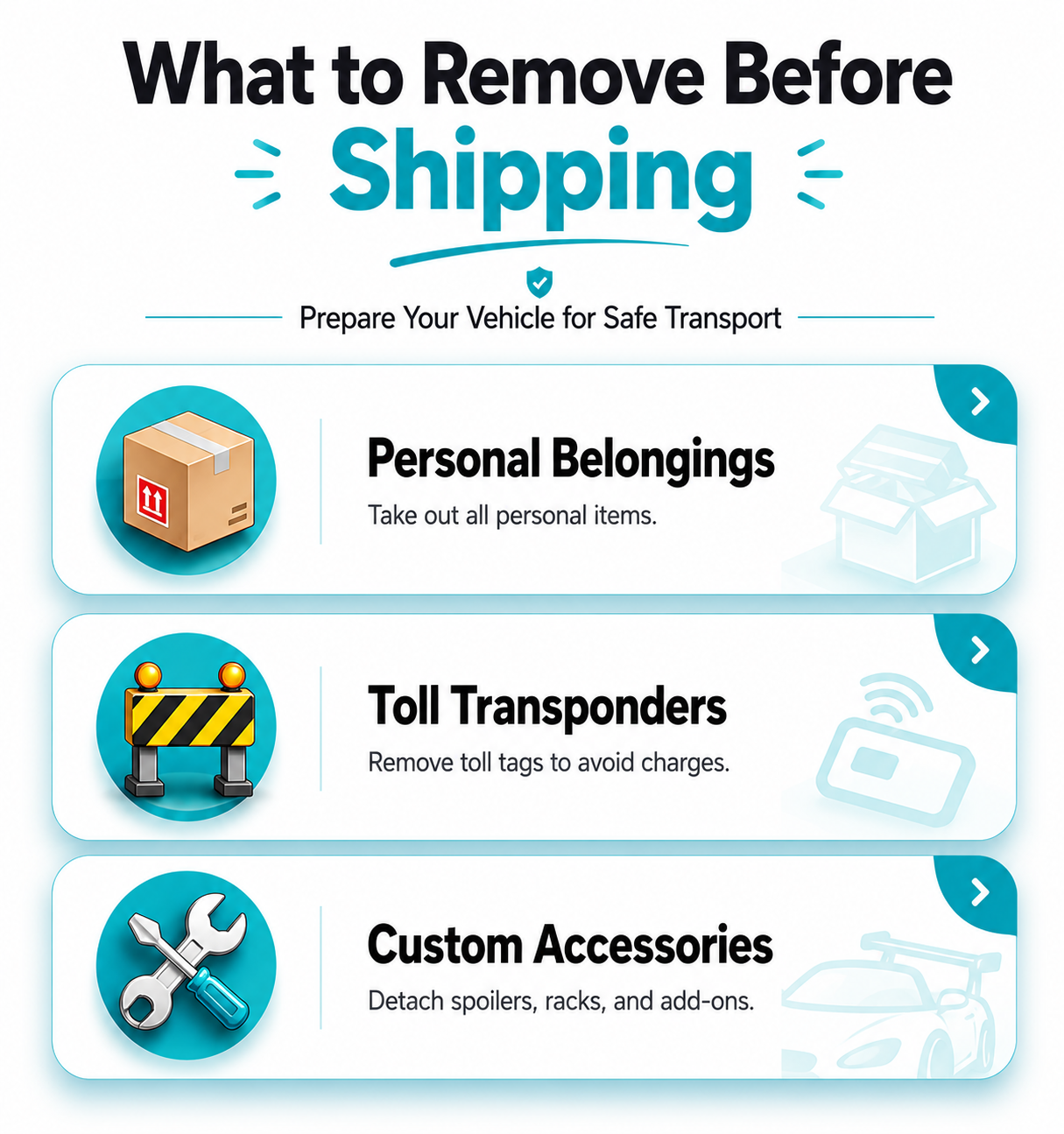
- Fuel, cleaning, or detailing costs before turn-in
- Damage from pre-existing conditions not documented at the joint inspection
- Storage fees beyond the free SIT window
- Aftermarket accessory damage or removal/reinstallation costs
- Private carrier costs if you choose door-to-door convenience over VPC pickup/drop-off
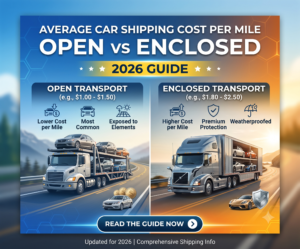
On the insurance side, the government contract carrier carries cargo liability coverage, but the claims process runs through the joint inspection report from turn-in, which is exactly why photographing your vehicle yourself at drop-off matters. If you’re shipping a second vehicle privately, it’s worth understanding auto transport insurance before you book, since coverage details, deductibles, and what counts as a valid claim vary by carrier. It also helps to compare car shipping cost per mile for open vs. enclosed transport so you know what a fair private quote looks like versus what SDDC covers for free.
Rules, size limits, and entitlements described here can vary by branch, base, and destination country, and they’re revised from time to time always confirm current details with your installation’s transportation office or PCS counselor before finalizing your shipment plan.
Frequently Asked Questions
Yes, if you have PCS orders to or from an OCONUS duty station, the government covers one POV shipment through SDDC/DPS. It doesn’t cover a CONUS-to-CONUS move or a second vehicle — those require a private auto transport company.
Government-funded orders typically cover only one vehicle. If your household has two cars, the second one needs to be shipped through a private carrier at your own expense, or left in storage or with family.
It may be held at customs or rejected for shipment. Many service members instead ship an oversized or non-compliant vehicle to a CONUS location via private transport, or store/sell it before the move, rather than risk delays overseas.
As soon as you have confirmed orders. Popular VPC windows fill up fast during peak PCS season, so scheduling early — even before your household goods move is finalized — protects your turn-in date.
File a claim referencing the joint inspection form completed at turn-in. This is why photographing your vehicle’s condition yourself before drop-off matters — it’s your own record if the paperwork is disputed.
Yes, motorcycles can qualify for government-funded shipment under similar PCS rules, though size and handling requirements differ from standard vehicles — confirm specifics with your transportation office, or look at our motorcycle shipping services if you’re arranging it privately.
A limited number of SIT days is usually included if you can’t pick up your vehicle right when it arrives. Beyond that window, daily storage fees typically apply at the port or VPC.
Start with your installation’s Personal Property Processing Office — they can escalate DPS/SDDC issues. For a privately booked shipment, the carrier or broker you hired is your first point of contact.