| Trust & Customer Psychology Read time: ~14 min |
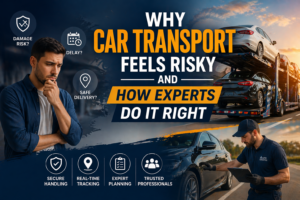
You have spent years making payments on it. You have driven it to every family vacation, every job interview, every late-night run when you needed to clear your head. Your car is not just a depreciating asset on a balance sheet, it is one of the most personal objects you own. And now a stranger is asking you to hand over the keys, sign a form, and trust that it will arrive safely at a destination you cannoat see.
That feeling in your stomach is completely normal. It is not irrational. It is not a sign that auto transport is dangerous. It is the natural psychological response to transferring control of something valuable to someone you have known for approximately forty-five minutes.
This article is not going to tell you that shipping a car is perfectly safe and that you should stop worrying. Instead, it is going to take your anxiety seriously, explain exactly where it comes from, and then show you precisely what legitimate, professional auto transport companies do differently so you can tell the real ones from the ones that deserve your distrust.
The goal is not blind confidence. The goal is informed confidence — knowing what good looks like, so you can recognize it when you see it.
The Psychology Behind the Fear: Why This Anxiety Is Rational
Consumer psychologists have a term for what happens when we hand something valuable to a service provider: perceived loss of control. It is the same feeling that makes people grip armrests on airplanes even though the statistics overwhelmingly favor flight safety. Your brain is not processing statistics, it is processing the simple, uncomfortable fact that your car is no longer in your hands.
For auto transport specifically, this anxiety is amplified by several factors that are unique to the industry:
- You cannot watch your car being loaded, transported, or unloaded the way you can watch a restaurant kitchen. The entire process happens out of sight. Visibility gap:
- Most people ship a car only one to three times in their life. There is no accumulated personal experience to draw confidence from. Novelty factor:
- The average car in the United States is worth $28,000 to $48,000. This is not a package you ordered from an online store. High perceived stakes:
- Auto transport has a documented history of fly-by-night brokers and deposit scams. That reputation, even when undeserved, colors every interaction. Industry reputation baggage:
- The carrier knows far more about how transport actually works than you do. That knowledge gap creates an inherent power imbalance that feels uncomfortable. Information asymmetry:
Here is the important thing to understand: acknowledging these factors does not mean auto transport is inherently unsafe. It means your anxiety has legitimate origins. And once you understand those origins, you can address each one directly rather than either dismissing the feeling or surrendering to it.
What Scammers Know About Your Fear (And How They Use It)
Before we talk about what legitimate carriers do right, it is worth understanding how bad actors exploit the exact psychology we just described. Not because you should be paranoid, but because recognizing manipulation tactics is one of the most valuable skills a first-time shipper can have.
The Too-Low Quote Trap
When you are anxious about a large financial transaction, an unusually low price feels like relief. Scam operations understand this deeply. They quote $200 to $400 below market rates, enough to feel like a bargain, not so low that it triggers disbelief. The low quote gets you to commit with a deposit. Once the deposit is paid, the price increases at pickup, or the car simply never gets picked up at all.
Legitimate carriers price based on real variables: the distance, your vehicle’s weight and dimensions, current fuel costs, route demand, and the type of transport (open vs. enclosed). A quote that ignores all of these variables and simply comes in the lowest is almost certainly not reflecting real costs.
The Urgency Pressure Play
“This price is only valid today” and “We have a truck in your area right now” are lines designed to override your instinct to pause and verify. Urgency is the enemy of due diligence, and bad actors know it. Reputable companies do not need to pressure you into booking within the hour. They have stable pricing windows and understand that customers need time to make considered decisions.
The Phantom Insurance Assurance
One of the most damaging scam tactics is vague reassurance. “Your car is fully covered, don’t worry about a thing.” No documentation. No certificate of insurance. No explanation of what the coverage actually protects against. Anxiety wants reassurance, and a confident-sounding promise feels like reassurance even when it means nothing.
Key Insight: Any carrier that is confident in their insurance will be eager to provide documentation, not just words. Hesitation to produce an actual insurance certificate is a hard stop.
The 4-Question Trust Test: Run This Before You Hand Over Any Keys
Across thousands of auto transport transactions, four questions emerge consistently as the most reliable indicators of whether you are dealing with a legitimate operation. These questions are not aggressive. They are not rude. Any professional carrier will welcome them, because these are the questions that separate people who do their job well from everyone else.
Question 1: What is your FMCSA Motor Carrier Number?
The Federal Motor Carrier Safety Administration (FMCSA) maintains a public database of all registered carriers and brokers at safer.fmcsa.dot.gov. Every legitimate auto transport company has a USDOT number and, for carriers, an active MC (Motor Carrier) number. When you receive a number, take two minutes to look it up.
What you are looking for: the company name should match, their operating status should be “Authorized,” and their insurance should show as active. If any of these three things does not match, stop the conversation.
Question 2: Can you send me your current Certificate of Insurance?
This is not a request that requires trust, it is a request for documentation that any insured carrier can fulfill within minutes. A Certificate of Insurance (COI) will show the carrier’s insurer, the policy number, the coverage type, and the coverage limits.
For open transport, minimum acceptable coverage is typically $100,000 per vehicle. For enclosed transport of high-value vehicles, you want to see $500,000 or more. If coverage limits are not discussed explicitly and documented, you have no protection if something goes wrong.
Question 3: Who specifically will be transporting my vehicle?
Many brokers in the auto transport industry dispatch your vehicle to a carrier network after booking. This is not inherently problematic but you have the right to know who will actually have your car. Ask for the specific carrier’s name, their USDOT number, and their contact information. A reputable broker will provide this proactively at the time of dispatch. If they resist or cannot provide it, that is a concern.
Question 4: What does the Bill of Lading look like?
The Bill of Lading (BOL) is the single most important document in your auto transport transaction. It is the legal record of your vehicle’s condition at pickup and delivery. Ask to see a sample before booking. A legitimate company will have a professional, detailed BOL form that includes: vehicle identification, a condition checklist with space for pre-existing damage notes, signatures from both driver and customer at pickup and delivery, and pickup and delivery timestamps.
A BOL that consists of a handwritten note on a clipboard is not a BOL. It is a liability shield for the carrier, not a protection for you.
None of these four questions are confrontational. They are standard due diligence. A carrier that reacts defensively to any of them is showing you who they are.
What Reputable Carriers Actually Do at Pickup: A Step-by-Step Walkthrough
One of the most effective ways to eliminate anxiety is to know exactly what should happen at every stage of the process. When reality matches your expectations, you feel in control. When you have no expectations, any deviation, even a completely normal one can feel like a warning sign.
Here is what a professional pickup looks like from arrival to departure:
- The driver arrives within the scheduled window (typically a 2 to 4-hour window) and introduces themselves by name. They carry a copy of the transport order.
- Before touching your vehicle, the driver walks around it with you and notes every existing mark, scratch, dent, or chip on the condition report section of the Bill of Lading. Good carriers do this methodically, not quickly.
- Photos are taken of all four sides of the vehicle, the roof, and any pre-existing damage areas. In 2026, this is often done via a carrier app with geotagged timestamps.
- Both you and the driver sign the Bill of Lading acknowledging the documented condition. You receive a copy or a digital version, before the vehicle is loaded.
- The driver explains how your car will be positioned on the carrier (particularly relevant for open multi-car trailers) and confirms the expected delivery window.
- You receive contact information for the driver directly, not just the company’s 1-800 number, so you can track progress.
Notice what a professional driver does NOT do: rush you through the inspection, discourage you from noting pre-existing damage (Oh, that’s nothing, don’t worry about it), decline to give you a signed copy of the BOL, or be evasive about when exactly the car will arrive.
Pro Tip: Take your own photos and a short video walkthrough of your vehicle the morning of pickup, before the driver arrives. Date-stamp everything. This is your independent record and the best insurance you can give yourself.
Understanding What Your Transport Insurance Actually Covers
This is the area where the most misunderstanding and the most anxiety lives. Most customers assume “the carrier is insured” means their car is fully protected under all circumstances. It does not. Understanding exactly what is and is not covered is one of the most important things you can do before shipping.
What Carrier Insurance Typically Covers
- Physical damage to your vehicle caused directly by the carrier’s negligence during transport
- Damage resulting from an accident involving the carrier’s truck
- Damage from loading or unloading handled improperly by the driver
What Carrier Insurance Typically Does NOT Cover
- Mechanical or electrical issues that develop during transport (unless directly caused by an accident)
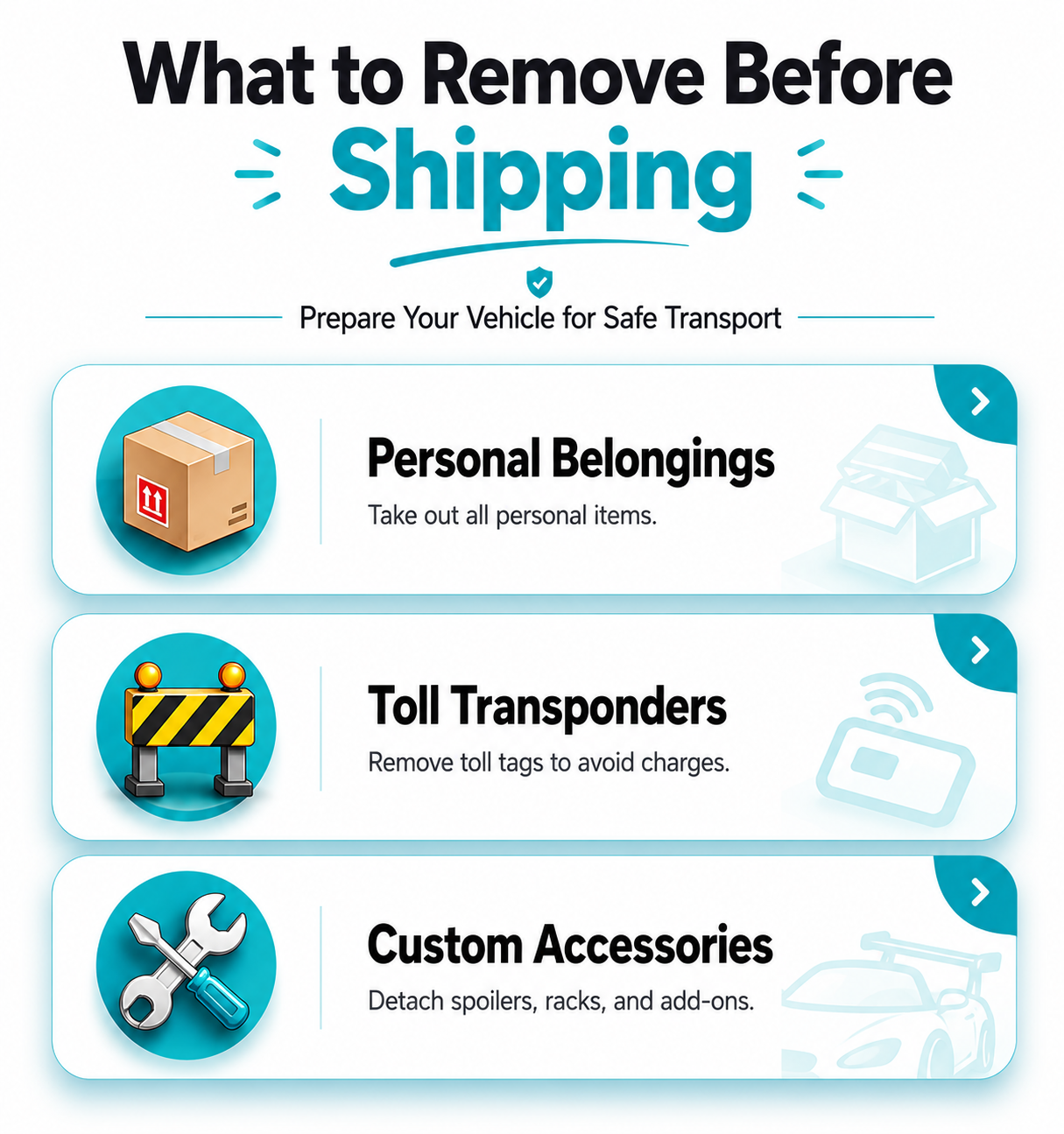
- Personal items left inside the vehicle
- Pre-existing damage that was not documented on the Bill of Lading at pickup
- Damage from natural events (hail, flooding, falling debris on open carriers) in many policies
- Acts of God or weather events, depending on the carrier’s specific policy language
This is not fine print designed to cheat you. It is the standard structure of commercial cargo insurance. The critical takeaway is that your Bill of Lading is your proof. Without thorough documentation of your car’s condition at pickup, any claim you make can be challenged on the grounds that the damage existed before transport.
Should You Add Your Own Coverage?
Your personal auto insurance policy may extend to cover your vehicle during transport. Call your insurer before shipping and ask specifically: “Does my comprehensive coverage apply while my vehicle is being transported by a commercial carrier?” Many policies do include this and for high-value vehicles, it is worth confirming.
For classic, exotic, or collector vehicles, specialized transport insurance through a company like Hagerty or through your enclosed carrier is strongly recommended.
Scenario | Covered by Carrier? | Covered by Personal Auto? | Action Required |
Accident during transport | Yes (if carrier negligent) | Possibly | Document at delivery with photos |
Hail damage (open carrier) | Often excluded | Yes (comprehensive) | Confirm with insurer before shipping |
Personal items stolen from car | No | Possibly (homeowners/renters) | Remove all valuables before shipping |
Pre-existing scratch | No — excluded | No | Document everything on BOL at pickup |
Mechanical issue post-delivery | Rarely | No | Avoid — nearly impossible to prove |
The Delivery Inspection: Your Last Line of Defense
Most transport damage disputes happen because of one mistake: the customer signed the Bill of Lading at delivery without thoroughly inspecting the vehicle first. Signing the delivery BOL is the legal acknowledgment that the vehicle was received in the condition documented. Once that signature is on paper, your ability to make a claim for damage observed later is severely limited.
How to Conduct a Proper Delivery Inspection
- Inspect the vehicle before the driver leaves not after. The driver needs to be present.
- Compare the vehicle’s current condition against the pickup BOL, not against your memory.
- Check all four sides, the roof, the undercarriage (look for dragging damage), and all glass surfaces.
- Test basic functions: doors, windows, mirrors, lights. A transport incident can sometimes cause electrical issues that are not immediately visible.
- If you find any damage that was not on the pickup BOL, photograph it immediately and note it on the delivery BOL before signing. Write specifically: “Subject to inspection for [describe damage].”
- Do not sign a “clean” delivery BOL if you have concerns. You can note exceptions on the BOL and still sign.
If a driver pressures you to sign quickly, that is a serious red flag. Professional drivers understand that a thorough delivery inspection is part of the job. They wait.
What to Do If Damage Is Discovered
If you find genuine transport damage at delivery, do not panic but act quickly. The process is:
- Document everything with dated photos and video before moving the vehicle.
- Note the damage on the delivery BOL and ensure the driver acknowledges it.
- Contact the carrier’s claims department (not just the broker) within 24 hours.
- File a written claim with your personal auto insurer as a parallel track.
- If the carrier disputes responsibility, the FMCSA dispute process is available, as is small claims court for amounts under state thresholds.
Communication Is the Underrated Trust Signal
Of all the indicators that separate a good auto transport experience from a bad one, customer communication is the most consistently cited factor in positive reviews — and its absence is the most cited factor in negative ones. Interestingly, this holds true even in cases where the delivery was on time and the car arrived without damage.
People want to feel like they are not forgotten once the keys change hands.
What professional communication looks like across the transport journey:
- Written confirmation of the booking, pricing, and expected pickup window. At booking:
- A call or message confirming the driver’s name, contact number, and the specific pickup window. 24 to 48 hours before pickup:
- Driver confirms delivery ETA and provides direct contact information. At pickup:
- At minimum, one mid-route status update. For longer routes, daily check-ins are the gold standard. During transit:
- Confirmation of delivery window so you can arrange to be present. 24 hours before delivery:
- Walkthrough, signed BOL, and any follow-up documentation sent digitally. At delivery:
If the company you are dealing with communicates proactively at every one of these touchpoints without being chased, that is one of the strongest signals you will find that you are working with a professional operation. Silence is not neutral, it is the breeding ground for anxiety.
What to Do If You Cannot Reach Your Carrier: If a carrier goes silent for more than 24 hours during active transport with no explanation, escalate to the broker (if applicable) and request a status update in writing. Document all contact attempts. This is both a protective measure and a reasonable expectation of service.
Rebuilding Trust After a Bad Experience
If you have been burned by an auto transport company before, a delayed pickup, unexpected price increases, damage that was denied, a deposit that was never returned your anxiety is not just psychological. It is based on direct experience. That is a different situation, and it deserves a different response.
The answer is not to give up on auto transport. It is to approach the next transaction with the structured due diligence that the first one did not include. The customers who have the worst experiences consistently share one thing in common: they chose based primarily on price and did not ask the four verification questions before booking.
One additional layer of protection that experienced shippers use: always book with a company that offers a deposit-only payment structure, where the significant majority of payment (typically 70 to 80 percent) is due at delivery after inspection not before. This structure aligns the carrier’s financial incentive with delivering your vehicle in good condition. Companies that demand full payment upfront have removed that incentive.
The best auto transport companies do not need you to pay in full before delivery. Their confidence in their service is expressed through their payment structure.
The Bottom Line: Informed Confidence Over Blind Trust
The fear of handing over your car is not something to be talked out of. It is something to be educated through. And the education is not complicated.
Verify the FMCSA registration. Request the Certificate of Insurance. Know who specifically will have your vehicle. Read and sign a thorough Bill of Lading at both pickup and delivery. Document everything with your own photos. Expect proactive communication, and treat silence as a warning sign.
These steps take approximately twenty minutes of your time. They are the difference between an auto transport experience built on hope and one built on documented, verifiable accountability.
Professional auto transport carriers are not asking for blind trust. The ones worth working with are the ones who actively invite scrutiny because they know they will pass it.