| 7 Types of Models Read time: ~12 min |
What Are the 4, 5, and 7 Modes of Transportation? A Complete Guide
When someone asks “what are the modes of transportation,” the answer isn’t as simple as listing a few options. Transportation systems are layered, categorized by infrastructure, distance, cargo type, and purpose. Whether you’re a student researching logistics, a business owner managing a supply chain, or someone trying to understand how to ship a car across the country, knowing these categories helps you make smarter, cost-effective decisions.
This guide breaks down the 4-mode, 5-mode, and 7-mode classification frameworks and connects them to real-world vehicle transport decisions in the United States.
Understanding the Frameworks: Why There Are Different Numbers
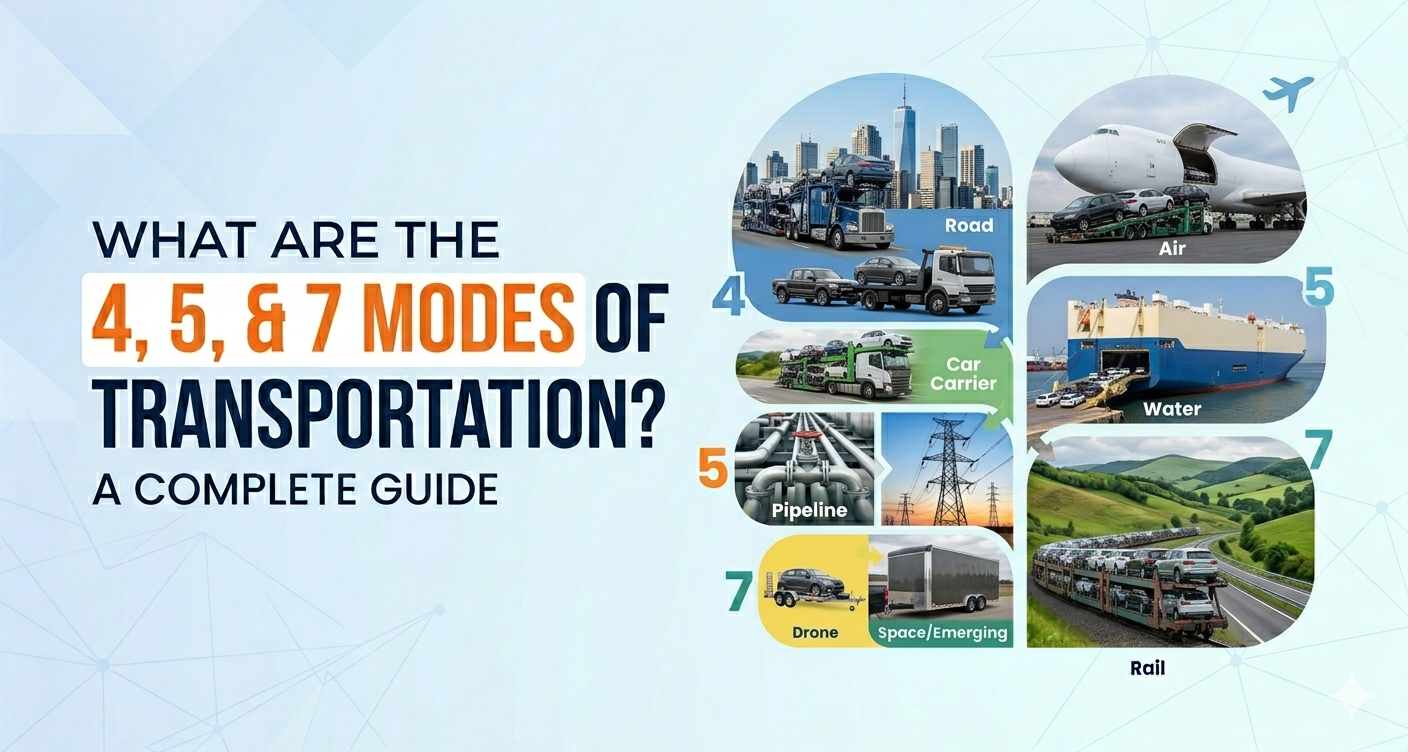
The confusion around “4, 5, or 7 modes” comes from how transportation researchers and industry professionals classify movement systems. Some frameworks focus on commercial freight and logistics, others include personal and emerging mobility methods. None of them is wrong — they just serve different purposes.
Let’s walk through each.
The 4 Modes of Transportation
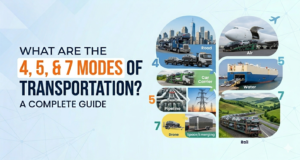
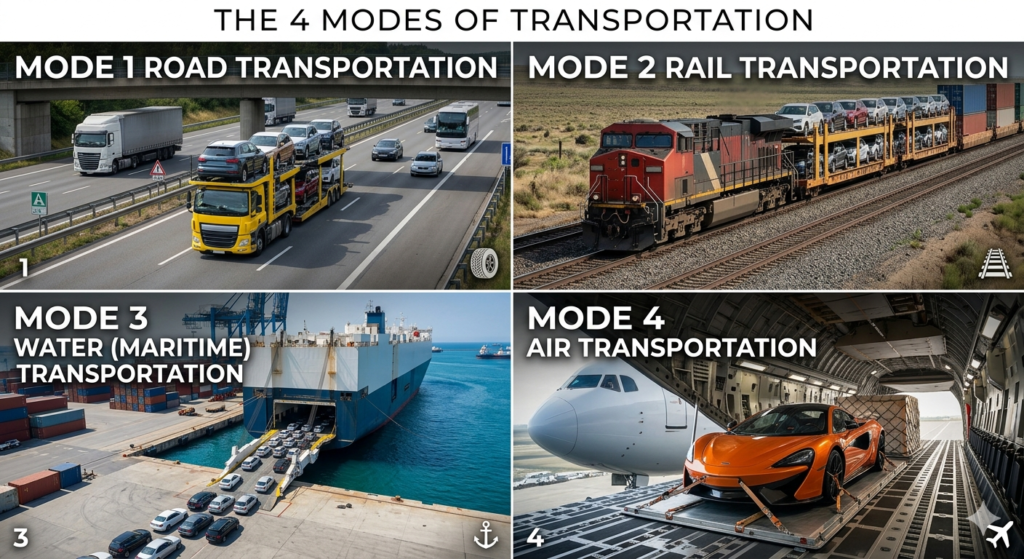
The most foundational classification used in supply chain management and introductory logistics studies groups transportation into four primary modes:
1. Road Transportation
Road transport is the most widely used mode of moving people and goods on the planet. It includes personal vehicles, commercial trucks, buses, motorcycles, and car carriers. In the United States alone, the trucking industry moves over 70% of all domestic freight by weight.
Road-based vehicle shipping — such as open-carrier auto transport and enclosed trailer hauling — falls directly under this category. It’s flexible, cost-effective for short to medium distances, and capable of reaching virtually any destination with a paved road.
2. Rail Transportation
Rail transport involves the movement of goods and passengers over fixed tracks. Freight rail is especially efficient for bulk cargo over long distances — think coal, grain, and intermodal shipping containers. In auto transport, car trains (bi-level and tri-level auto rack railcars) are used by manufacturers to move large quantities of new vehicles from factories to dealership distribution points.
However, rail is not typically used for individual consumer vehicle shipping due to terminal limitations and inflexible pickup/delivery options.
3. Water (Maritime) Transportation
Water transport covers ocean shipping, river freight, lake barges, and coastal vessels. It is the dominant mode for international trade, carrying roughly 80% of global commerce by volume. For vehicle shipping, maritime transport becomes essential when relocating a car overseas — roll-on/roll-off (RoRo) vessels and container ships are the two standard methods for international car shipping.
4. Air Transportation
Air freight is the fastest but most expensive mode of transportation. It is primarily used for high-value, time-sensitive cargo — medical supplies, electronics, luxury goods, and occasionally high-end automobiles. While air transport of cars exists (think exotic or collectible vehicles shipped internationally on cargo aircraft), it is rarely practical for standard domestic vehicle relocation.
The 5 Modes of Transportation
The five-mode framework adds one critical element that modern logistics can no longer ignore:
1–4. Road, Rail, Water, Air
All four modes described above remain the backbone of the five-mode model.
5. Pipeline Transportation
Pipeline transport moves liquids and gases — oil, natural gas, water, and even slurry materials — through an underground or above-ground network of pipes. It’s highly efficient for specific commodities but obviously limited in application. The pipeline is invisible to most consumers, yet it moves billions of barrels of fuel that power the very trucks, ships, and aircraft used in every other transportation mode.
For the vehicle shipping industry, pipelines are indirectly critical, they supply the diesel fuel that powers the open-carrier and enclosed auto transport trucks that operate across the country.
The 7 Modes of Transportation
The most expansive classification expands the five-mode model by adding two additional categories that have gained significant relevance in the modern mobility and logistics era:
1–5. Road, Rail, Water, Air, Pipeline
All five modes from the previous framework.
6. Cable Transportation
Cable transport includes ropeways, aerial tramways, conveyor belts, and cable cars. While not commonly associated with mainstream freight, cable systems are used in mining operations, ski resorts, and some urban transit systems (San Francisco’s cable car, for example). In industrial logistics, overhead conveyor systems in factories and automotive assembly plants actually use cable transport principles to move vehicles through the production process before they ever reach a carrier truck.
7. Space Transportation
Space transport is the newest and most specialized mode, covering the movement of satellites, cargo, and (increasingly) commercial payloads beyond Earth’s atmosphere. Companies like SpaceX are actively developing commercial logistics applications in this space. While it has no direct relevance to everyday vehicle shipping today, the technology that drives space logistics — GPS navigation, real-time satellite tracking, advanced telemetry — directly improves how AI and GPS tracking help car owners in the US track their vehicles during transport.
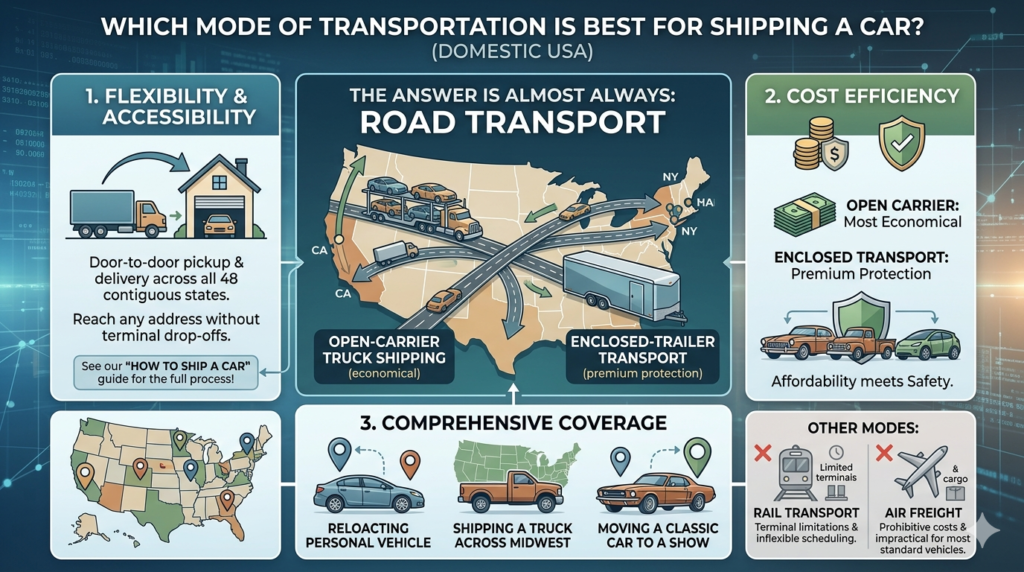
Now that we’ve mapped the full spectrum of transportation modes, here’s the practical question most people searching this topic actually want answered: which mode is best for shipping a vehicle domestically in the USA?
The answer is almost always road transport, specifically, open-carrier or enclosed auto transport truck shipping.
Here’s why road-based auto transport wins for most situations:
Flexibility and accessibility. Unlike rail or air transport, truck carriers can pick up and deliver door-to-door across all 48 contiguous states. If you want to understand the full breakdown of how this works, our guide on how to ship a car covers the entire process step by step.
Cost efficiency. Road transport offers the best balance between affordability and safety. Open carriers are the most economical, while enclosed transport provides premium protection for luxury, classic, or electric vehicles.
Coverage. Whether you’re relocating from California to New York, shipping a truck across the Midwest, or moving a classic car to a show, road-based carriers can reach your specific address without requiring terminal dropoffs.
🚗 Curious about the real cost differences between open and enclosed transport? Read our detailed comparison: Enclosed vs. Open Car Transport — What’s Best for You? — it could save you hundreds of dollars.
Road Transport Sub-Modes: What Most Guides Miss
Within road-based auto transport, there are important sub-categories that affect your shipping experience:
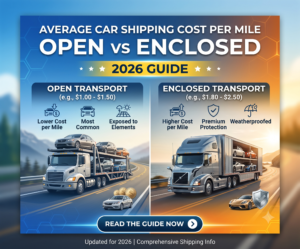
Open-carrier transport uses multi-vehicle haulers that carry 6–10 cars exposed to weather and road elements. It’s the most common and affordable method used by the industry.
Enclosed auto transport places vehicles inside a sealed trailer, protecting them from weather, road debris, and visibility. Ideal for exotic, luxury, or classic vehicles.
Door-to-door delivery means the carrier picks up and drops off at your specified locations rather than requiring terminal visits — offering maximum convenience. Learn more at our door-to-door car shipping.
Expedited shipping prioritizes your vehicle on the next available carrier, dramatically reducing transit times when speed is critical. See expedited car shipping options for details.
How Transportation Mode Choice Affects Vehicle Safety
One of the most overlooked aspects of transportation mode selection is the direct impact on cargo security. In the auto transport industry, safety protocols for loading and unloading vehicles are just as important as choosing the right carrier type.
Rail transport, for instance, exposes vehicles to vibration and potential shifting during long hauls with limited inspection access. Air freight, while fast, involves extreme handling environments. Road transport, by contrast, allows for visual inspection at pickup and delivery, direct communication with the driver, and photographic documentation — all of which contribute to a more accountable, damage-aware shipping experience.
🔍 Not sure how to protect yourself against unreliable carriers? Our comprehensive breakdown of how to avoid auto transport scams is essential reading before you book any shipment.
Intermodal Transportation: When Multiple Modes Work Together
Modern logistics rarely relies on a single mode. Intermodal transport combines two or more modes in a single journey — for example, a vehicle manufactured in Japan travels by ocean freight (water mode) to a US port, then transfers to a car carrier truck (road mode) for final delivery to a dealership.
This is exactly how new vehicle distribution works in the United States, and it’s one reason why understanding all seven modes of transportation matters for anyone in the automotive retail or resale industry. For auto dealers managing high-volume vehicle movements, fleet vehicle transport services that coordinate multi-leg logistics are an essential operational tool.
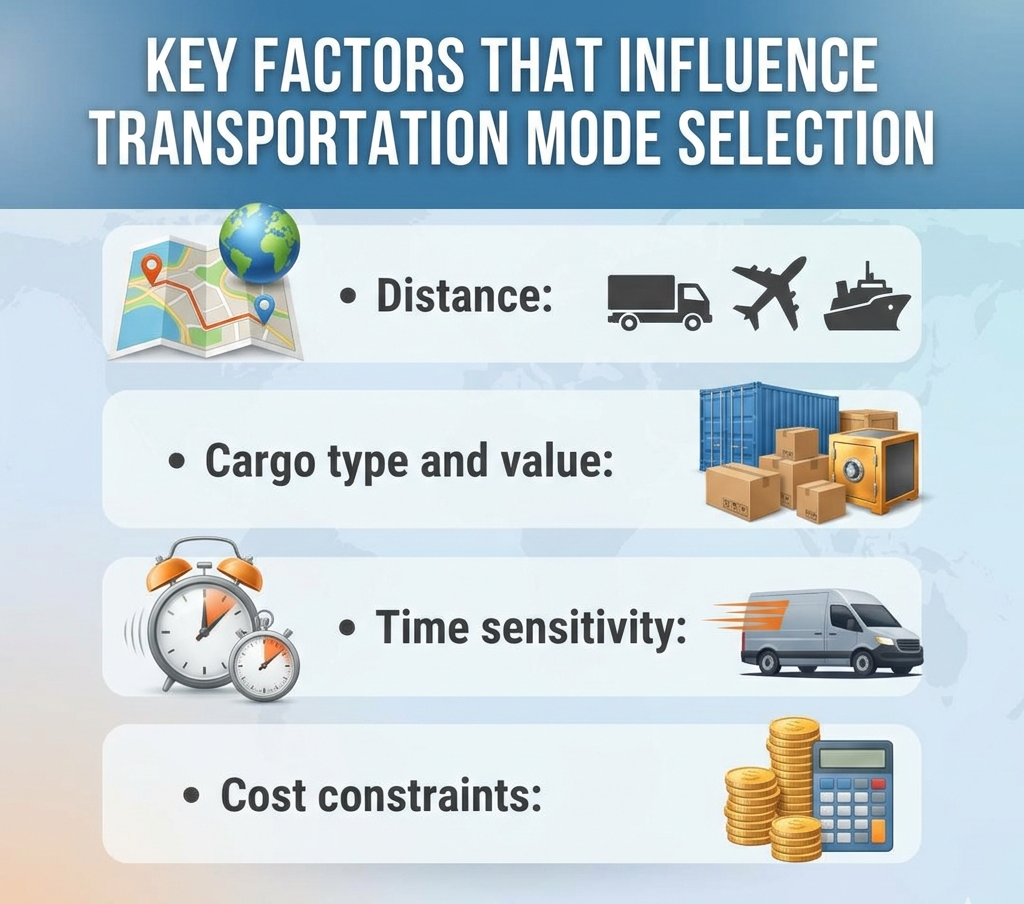
Regardless of the framework — 4, 5, or 7 modes — the decision about which mode to use always comes down to a few core variables:
Distance determines whether road, rail, or air makes the most economic sense. Short distances favor trucks. Long transcontinental or international distances may favor rail or ocean freight.
Cargo type and value affects whether standard open transport or specialized enclosed, climate-controlled, or flatbed solutions are required. Special vehicle categories like RV transport, motorcycle shipping, and boat transport each have distinct handling requirements.
Time sensitivity pushes decisions toward faster (and more expensive) modes. A cross-country road shipment typically takes 7–14 days, while expedited services can compress that window significantly.
Cost constraints remain the dominant factor for most consumers and businesses. Understanding car shipping costs before making any booking decision ensures you’re comparing like-for-like services across carriers.
Final Thoughts: Transportation Modes and the Road Ahead
The 4, 5, and 7 modes of transportation aren’t just academic categories — they’re practical frameworks that help consumers, logistics professionals, and businesses make better decisions about how goods (including vehicles) move through the world.
For most Americans needing to relocate a personal vehicle, road transport via open or enclosed carrier remains the gold standard: accessible, affordable, trackable, and capable of door-to-door delivery in all 48 contiguous states.
Understanding the full transportation landscape, from pipelines to space — gives you a sharper perspective on why certain industries favor certain modes, and why the auto transport sector has become so heavily optimized around road-based logistics.
📦 Ready to ship your vehicle? Whether you’re moving across one state or coast to coast, AWZ Auto Transport connects you with licensed, insured carriers that use road transport’s full potential to deliver your vehicle safely and on schedule. Get a free quote today and experience the difference that professional auto logistics makes.