Low-clearance and modified cars should be shipped on a trailer with a hydraulic liftgate or extended ramps, rated for a ground clearance under 4 inches, ideally inside an enclosed carrier. Before booking, confirm the carrier’s loading equipment and make sure the policy covers aftermarket parts, standard cargo insurance often values a modified car at stock trim, not at what you’ve actually put into it.
If you’ve lowered your car, run a body kit, or you’re moving a numbers-matching classic, a generic auto transport quote doesn’t tell you what you need to know, classic car auto transport is its own category of service for a reason. The two questions that actually matter are: what will the car roll onto, and what happens if something goes wrong. Everything below is built around answering those two questions before you hand over your keys.
Why Standard Car Carriers Damage Low Cars
Most multi-car haulers are built around a single assumption: a stock-height sedan or SUV with 6+ inches of ground clearance. The ramps on these trailers are steep by necessity, they have to get a car up onto a second deck in a short run of steel — and that steepness is exactly what turns a lowered front bumper or a splitter into a casualty.
The failure point is almost always the transition angle: the spot where a flat ramp meets a flat trailer deck, or where the ramp meets the ground. A car with air suspension, coilovers, or a factory sport package sitting an inch or two below stock will often clear a driveway just fine but bottom out hard the moment the geometry changes at that transition. Front lips, splitters, and lowered rocker panels take the brunt of it, and the damage is usually a scrape or a crack, not something dramatic — which is part of why it’s so easy to underestimate. Owners who’ve never shipped a modified car tend to picture a forklift-style loading process; in reality it follows the same safety protocols for loading and unloading vehicles every carrier should be using — the driver walking the car up a ramp at idle, feathering the brake, while everyone winces at the front end.
If your car has an air suspension system, raising it for loading and lowering it again once it’s strapped down is standard practice but only if the driver knows to do it, and only if the trailer’s tie-down points work with the ride height change. This is the first thing worth asking about before you book: has this driver loaded a lowered or modified car before, and does the trailer’s ramp angle account for it.
The Equipment That Actually Prevents Damage
The single biggest lever you have is the trailer itself. Not every “car hauler” is built the same way, and the difference shows up exactly where your car is most vulnerable — the ramp.
| Equipment | What it does | Why it matters for low cars |
|---|---|---|
| Hydraulic liftgate | Lowers to ground level, car drives on flat, then lifts to deck height | Removes the ramp transition angle almost entirely — the best option for cars under 4″ of clearance |
| Extended/beavertail ramp | A longer, shallower ramp than standard, often with a hinged tail section | Reduces the approach and departure angle enough for most lowered daily-driver setups |
| Standard fixed ramp | Short, steep incline built for stock-height vehicles | Highest risk for scraping; avoid for anything under 5″ of clearance |
| Wheel-net tie-downs | Straps that cradle the tire and wheel rather than hooking the frame or suspension | Protects aftermarket suspension components and coilovers from strap damage during transit |
| Frame/chassis tie-downs | Hooks directly to frame or subframe points | Fine for stock cars; can stress lowered suspension geometry if used incorrectly |
The practical takeaway: ask specifically whether the trailer has a liftgate or an extended ramp, and ask what tie-down method the driver uses. A carrier that answers these questions immediately and specifically has probably loaded a car like yours before. A carrier that says “don’t worry, we do this all the time” without naming the equipment usually hasn’t thought about it. This equipment question matters most on enclosed auto transport bookings, where the trailer is doing double duty protecting the car from both the elements and the ramp itself.
Enclosed vs Open Transport: When It’s Worth the Extra Cost
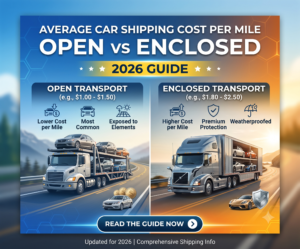
Enclosed transport typically runs 30–60% more than open transport — see our full breakdown of car shipping cost per mile for open vs. enclosed and for most daily-driven modified cars, that premium buys peace of mind more than it prevents specific damage. For genuinely rare or high-value classics, it buys something closer to necessity.
Open carriers expose your car to road debris, weather, and — because they carry more vehicles per load, more loading and unloading events where minor scrapes happen. For a car with a fresh clear-coat, a rare paint code, or original patina you don’t want touched, that exposure adds up over a multi-day cross-country haul.
Enclosed carriers split into soft-side and hard-side — our guide to enclosed vs. open car transport covers the full trade-offs. Soft-side enclosures (fabric or vinyl over a frame) are lighter, cheaper, and fine for moderate-value classics or modified cars where the main goal is weather and debris protection. Hard-side enclosures are more rigid, offer better security, and are what most collector-car specialists use for six-figure vehicles or anything being shipped to a show or auction where condition is being judged on arrival — the same standard we apply to luxury car transport.
The honest calculus: if your car cost more to modify or restore than it would cost to ship enclosed twice, enclosed is worth it. If you’re weighing a few hundred dollars against a car you’d be annoyed but not devastated to see with a rock chip, open transport with the right ramp equipment is usually a reasonable trade.
Vetting a Carrier Before You Book
The booking conversation is where most of the risk gets removed or ignored. A few direct questions do most of the work:
- What kind of trailer will my car actually ride on? Ask for the ramp type by name — liftgate, beavertail, or standard — not just “we have low-car experience.”
- Can you send photos of the trailer, not a stock photo? Legitimate carriers with the right equipment are usually happy to prove it.
- How many years has the assigned driver been hauling cars, and have they loaded lowered or classic vehicles specifically? Broker companies subcontract to independent drivers; the driver’s experience matters more than the company’s marketing. (See carrier vs. broker: what’s the difference if you’re not sure which you’re booking with.)
- What’s the tie-down method, and can it be adjusted for my suspension setup?
- What happens if there’s damage, who inspects it, and when?
- Is the company properly licensed and insured? Confirming this before you book is the single best way to verify an auto transport company’s license and avoid the tactics covered in our guide to how to avoid auto transport scams.
Booking through a broker isn’t automatically worse than booking directly with a carrier, but brokers add a layer between you and the person actually driving your car. If you go through a broker, ask them to confirm the specific carrier and trailer type in writing before the pickup date, not just “we’ll find you a good driver.” Our guide on how to choose the best car shipping company walks through the rest of the vetting process in more depth.
Insurance: Covering Aftermarket Parts and Agreed Value
Every legally operating auto transport company carries cargo insurance, our guide to understanding auto transport insurance covers how that coverage works but the default coverage is usually based on the vehicle’s stock market value, not the money you’ve put into wheels, a tune, a body kit, or a numbers-matching restoration. That gap is where owners get burned.
Two things close it. First, ask whether the carrier’s policy supports an agreed value endorsement, where you and the carrier agree in writing on the vehicle’s value — including modifications, before shipment. Second, keep your own documentation: receipts for major modifications, recent photos, and ideally an independent appraisal for classics. If a claim happens, this is what determines whether you’re arguing over a number the insurer picked or one you already agreed to.
The bill of lading — the inspection document signed at pickup and delivery — is the actual legal record of the car’s condition. Walk it with the driver at both ends, note every mark no matter how small, and don’t sign off on delivery until you’ve compared the car to your own pre-shipment photos. Insurance claims live or die on this document; a rushed signature at either end weakens your position if something’s wrong.
Loading Day Checklist
This covers the low-car-specific steps; pair it with our full guide on how to prepare your car for auto shipping for everything else.
- Wash the car so existing marks are visible, not hidden under dust.
- Take timestamped photos of all four sides, the roof, wheels, and any existing damage or modifications.
- Confirm ride height mode set air suspension to its loading setting if applicable, or tell the driver your ground clearance.
- Drain the fuel tank to roughly a quarter tank lighter and safer for transport.
- Disable the alarm or leave clear instructions for the driver to avoid triggering it.
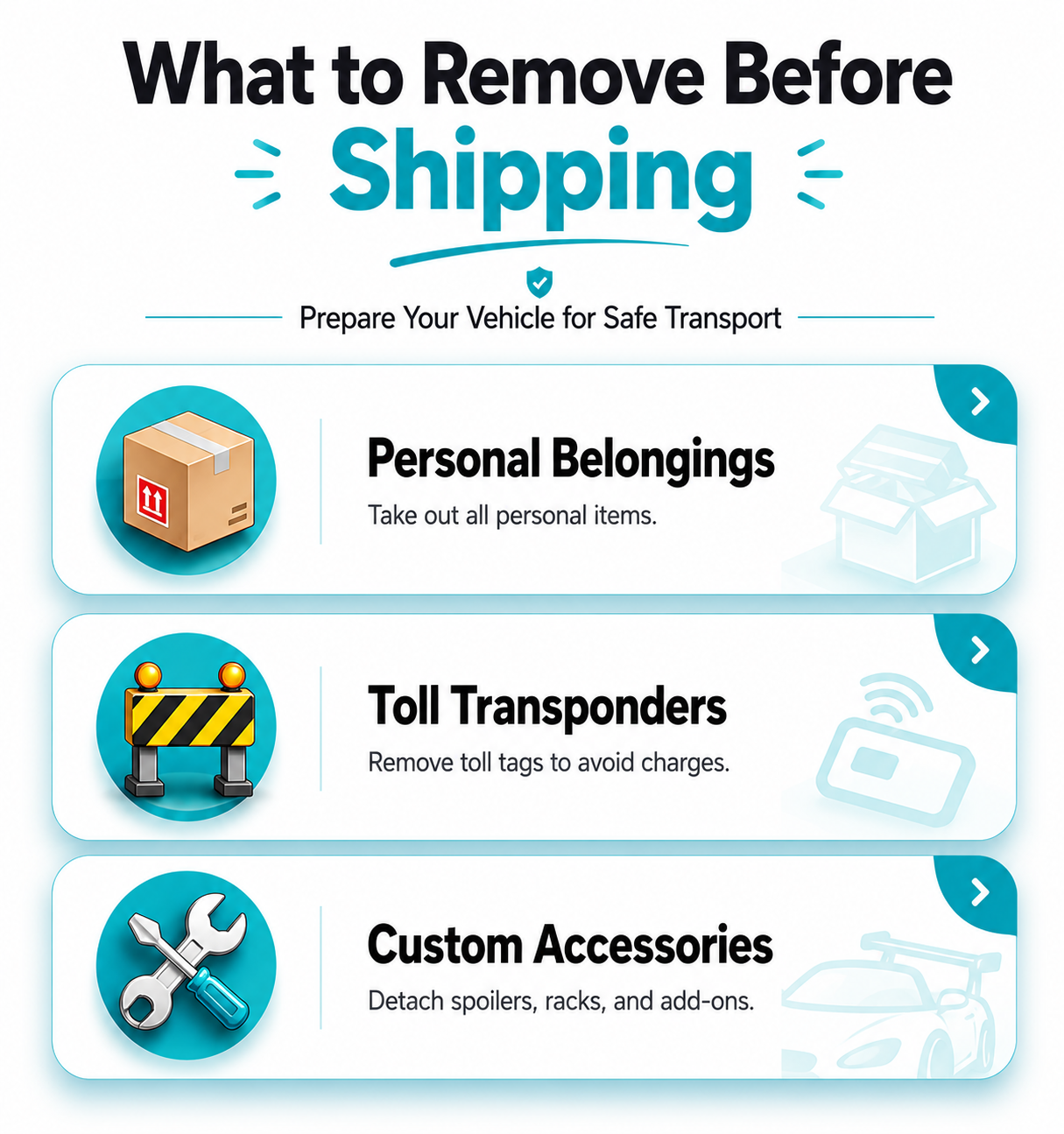
- Remove loose interior and exterior items antennas, removable spoilers, personal belongings.
- Walk the bill of lading with the driver before they leave, and again at delivery.
Even with the right liftgate, the right insurance paperwork, and a driver who’s clearly done this before, transport is never fully zero-risk, cars get bumped, straps shift, weather happens. The owners who come out of it fine are the ones who documented everything and asked the specific questions above before the trailer ever showed up. Trust the equipment; verify it in writing anyway.
Frequently Asked Questions
What ground clearance is too low for standard trailers? Anything under roughly 5 inches is at meaningful risk on a standard fixed-ramp trailer. Under 4 inches, a liftgate or extended-ramp trailer is strongly recommended rather than optional.
Is enclosed shipping necessary for a classic car? Not strictly necessary, but it’s the safer default for high-value or rare classics. Soft-side enclosed covers weather and debris protection at a lower cost; hard-side enclosed adds security and is common for six-figure vehicles.
How do I know if a carrier has a liftgate trailer? Ask directly and ask for photos of the actual trailer being assigned to your shipment, not generic marketing images. Carriers experienced with low cars will usually confirm this without hesitation.
Does insurance cover aftermarket parts? Standard cargo insurance often values the car at stock trim. An agreed-value endorsement, arranged before shipment, is the way to make sure modifications and restoration work are actually covered.
Can I ship a car with a body kit? Yes, but the front lip and side skirts are the most common damage points. A liftgate or extended-ramp trailer significantly reduces that risk compared to a standard ramp.
What should I photograph before pickup? All four sides, the roof, each wheel, the undercarriage if accessible, and close-ups of any existing damage or notable modifications, timestamped, and ideally the same day as pickup.
Do I need to disable my alarm before shipping? Yes, or give the driver clear instructions on how to. A triggered alarm mid-transit can drain the battery or, in rare cases, cause the driver to stop handling the vehicle until it’s resolved.
Should I drain the gas tank before shipping? You don’t need to drain it fully, but keeping it around a quarter tank is standard, it reduces weight and is a safety practice most carriers require or recommend.